
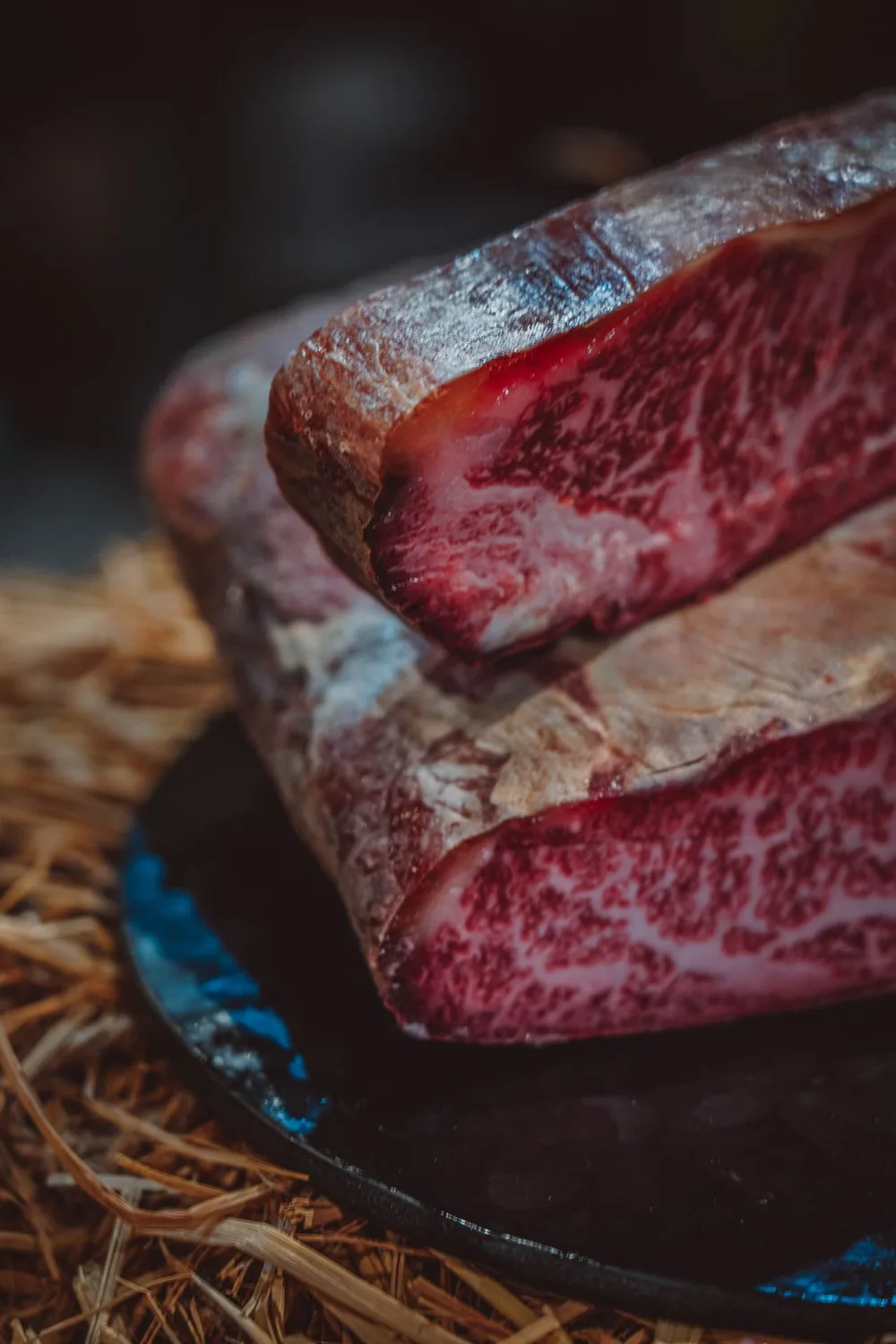
Core Culture · Koji Mold (Aspergillus oryzae)
Koji mold (Aspergillus oryzae) is Japan's officially designated "national fungus," and for more than a thousand years it has underpinned the entire culture of Japanese fermented foods — sake, miso, soy sauce, mirin, amazake and more. Koji Beef extends this single culture from "fermenting food" to "designing how cattle are raised," and on to "aging the meat" — the koji in the feed and the koji in the aging come from the same mold.
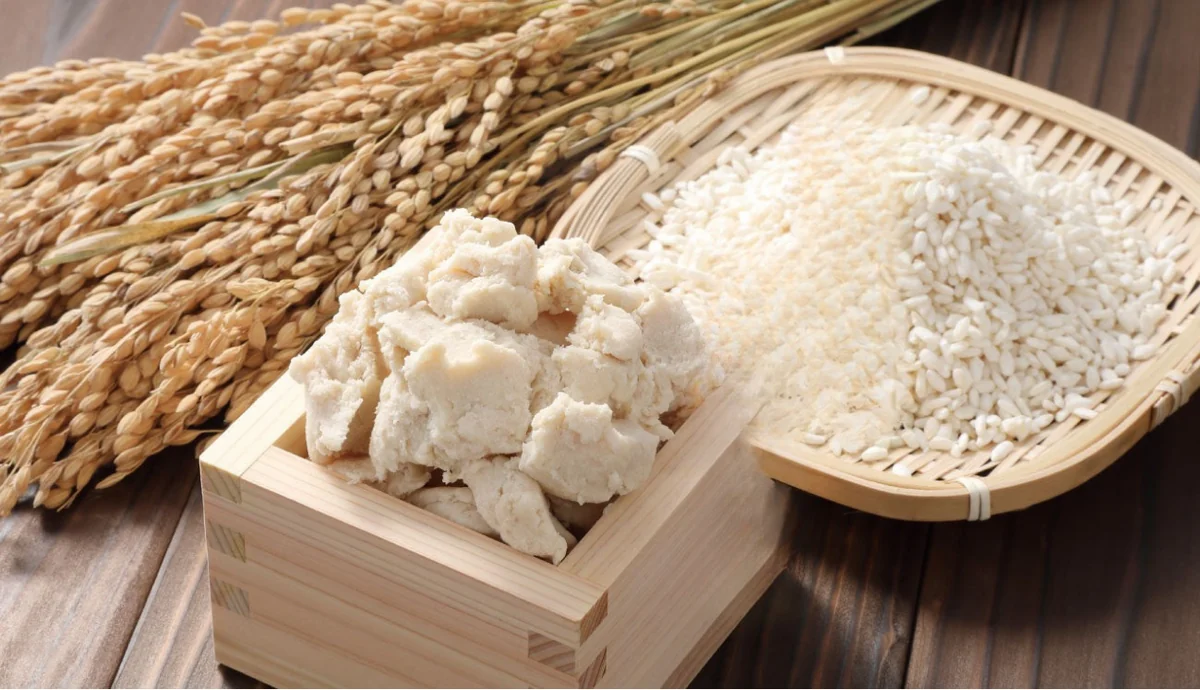
Amylase
Saccharifies starch into sugars, bringing a gentle, lingering sweetness.
Protease
Breaks proteins down into amino acids — the source of umami.
Lipase
Takes part in lipid transformation, shaping the aroma of the fat and the layers of texture.
China's "qu" (曲) and Japan's "koji" (糀) are different flowers from the same root — fermentation siblings across a thousand years. Koji Beef does not win with additives, but with its culture and its craft: simple ingredients, koji first.
Three Hundred Years of Lineage
In an era when eating meat was restricted, Japan used fermentation and curing to extend the keeping and flavor of beef. The starting point of that lineage was a Chinese herbal compendium.
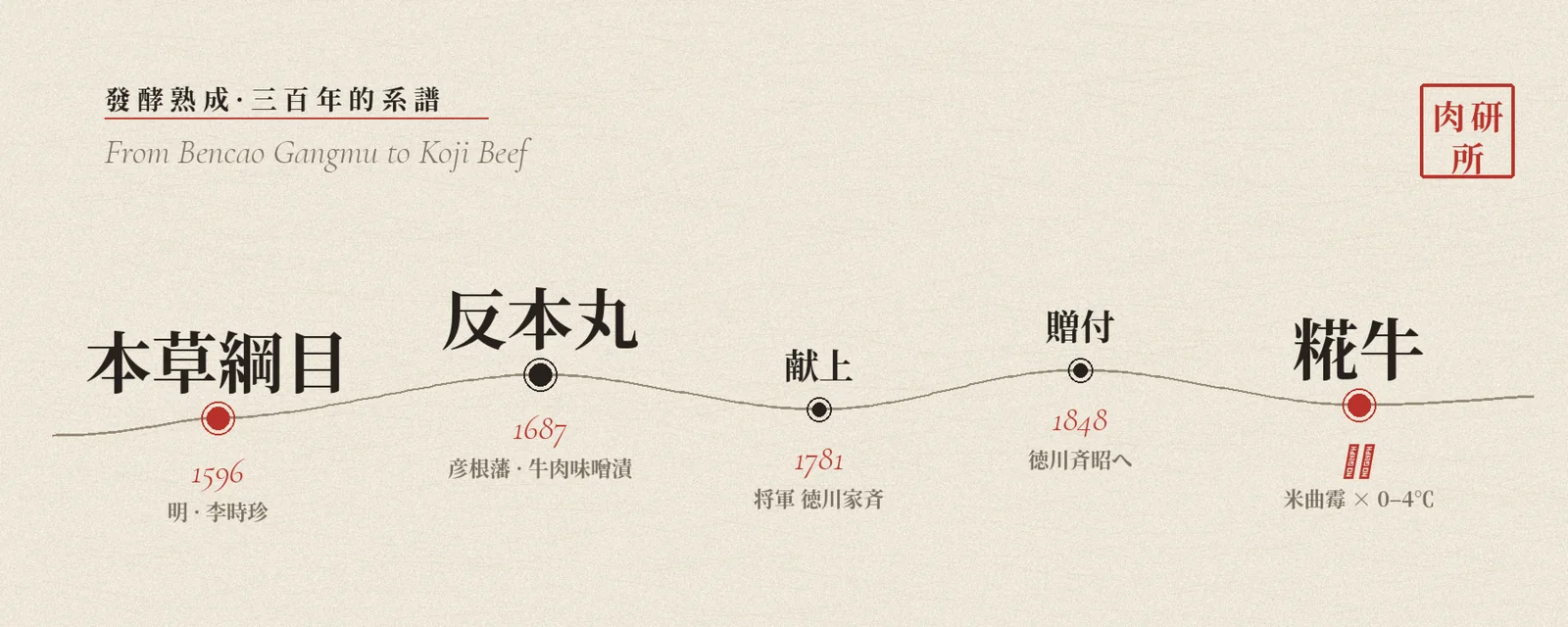
The Bencao Gangmu
It records that "yellow cattle beef is sweet in taste and non-toxic; it calms the center and benefits qi, nourishes the spleen and stomach, and strengthens the waist and legs." This herbal compendium later traveled east to Japan.
Birth of Hanpongan
Hanaki Denemon of the Hikone Domain, drawing on the Bencao Gangmu, created miso-cured beef known as Hanpongan (反本丸). That was more than three hundred years ago.
Presented to the Shogun's House
In 1781 the Hikone Domain presented miso-cured beef to Shogun Tokugawa Ienari; in 1848 Ii Naoaki gifted beef to Tokugawa Nariaki of Mito.
KOJI-BEEF
Through koji-mold fermentation and low-temperature aging, the idea of "elevating beef through fermentation" is rebuilt as a modern process that is quantifiable and reproducible.
The Process Three Hundred Years Ago
The production record preserved at Hikone Castle Museum describes the process as — butchering in midwinter · removing sinew · soaking in clean water to remove odor · steaming · tying with cord and drying in the shade.
The combination of deodorizing, steaming and shade-drying is, in essence, controlling moisture and flavor through low temperature and time — the same root as today's wet aging and dry aging.
The above is drawn from historical documents and records to illustrate the history of fermented and cured beef in Japan; it is not a claim about the efficacy of this product. Sources: public materials from Shiga Prefecture and the Ojōshi Yoriai-dome held by Hikone Castle Museum.
Koji Mold, 21 Days · The Science of Umami
Mycelium Establishment Phase
Koji mold is applied to the surface and a warm phase induces mycelial growth (mycelium cannot form below 22°C).
Enzyme Crust Formation Phase
An enzyme crust is established on the surface, a protective microbial layer forms, and protease activity begins.
Full Aging Phase
Free amino acids accumulate, and lipid oxidation produces the aged aroma (aldehydes and ketones).
Completion · Shipping
Umami and authentic aged aroma in one; the Western-style 45–60 days is cut to roughly half. Yield 75–80% (traditional dry aging: 65–70%).
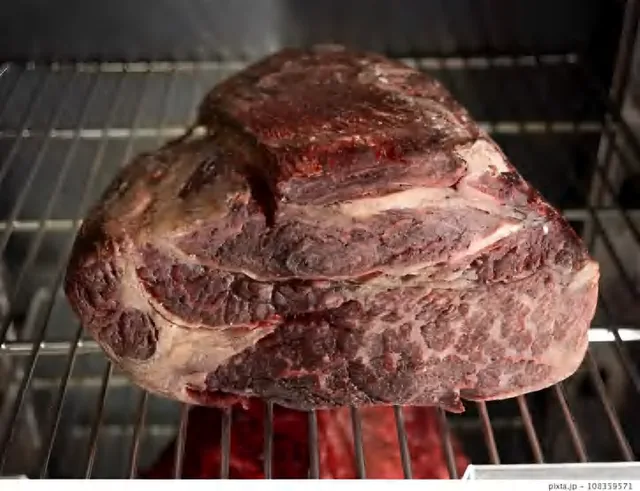
Umami Proven by Data
Amino acids (Glu · Asp) + nucleotides (IMP · GMP · AMP) → synergistic umami. A third-party laboratory accredited under CMA / CNAS quantifies the change in taste compounds of the same animal and the same cut before aging (day 0) and after aging (day 21 / 28 / 45), from which the equivalent umami concentration (EUC) is calculated.
- David Chang / Momofuku (USA) "Microbes make enzymes, enzymes make amino acids; glutamate + aspartate = umami = delicious."
- Noma / Copenhagen (per the World's 50 Best Restaurants list) makes garum with koji mold (Aspergillus oryzae), "cutting the time required by more than half."
- Jeremy Umansky / Larder (USA) "Koji Alchemy" is the authoritative global guide to koji-mold aging.
* Test data will be published on this page once obtained.
Koji-Aged Meat Products
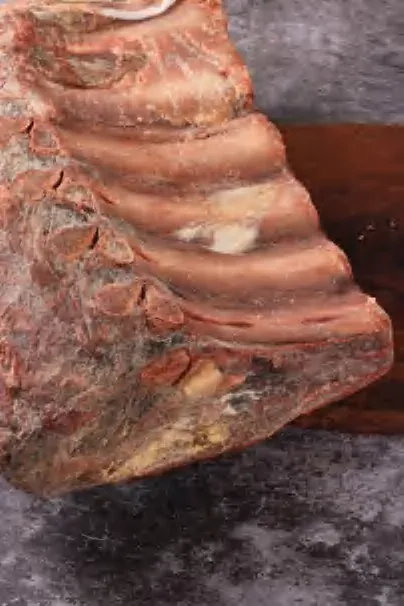
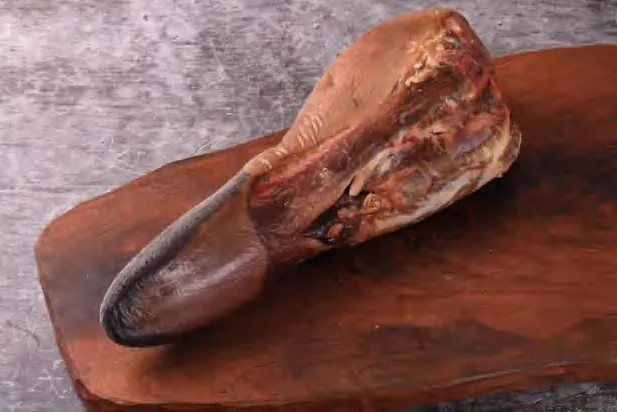
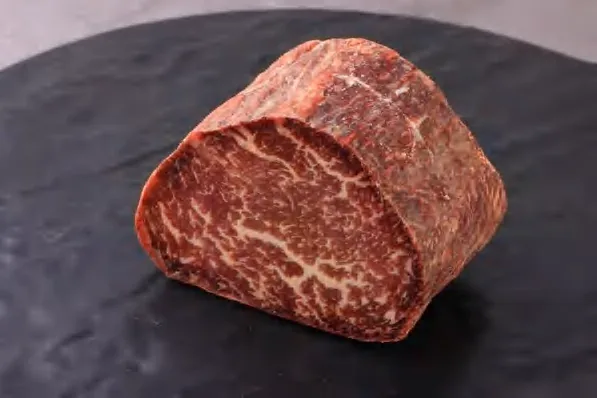
Koji-Aged Burger Patties
Made from high-quality koji-aged Wagyu — tender, juicy and rich in flavor. A patty seared outside and tender inside, uniting traditional craft with modern taste.
Seasoned ground meat · 100–110g/pack · 12–15kg/case · Prepared dish (quick-frozen, cooked, not ready-to-eat) · Thaw and heat before eating