
Recasting the Lead Role as Wagyu
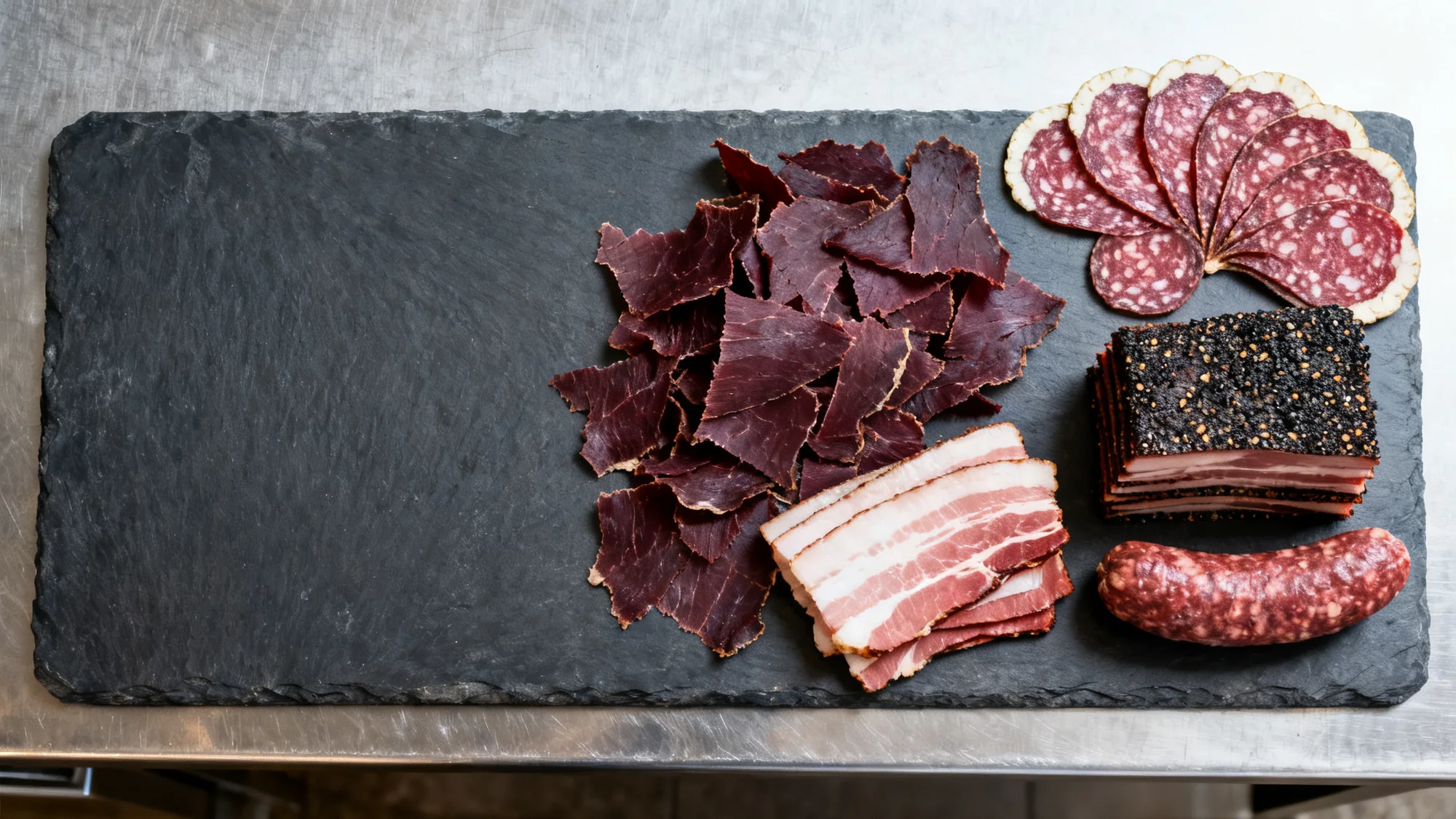
In European charcuterie the lead has always been pork. We recast it as wagyu — and used no existing recipe: prosciutto, salami, sausage, bacon and pastrami, all five categories developed from scratch at NIKU-LABO.
Melting Point of the Fat
Wagyu fat melts below human body temperature and dissolves in the mouth. Charcuterie is mostly sliced and eaten cold — no heat, nothing to hide behind, everything resting on the raw material. That is precisely where wagyu fat is at its best.
An Extension of Fermentation
Curing, fermentation, low temperature, time — what charcuterie requires is exactly what 03 Koji Fermentation & Aging has always done. KOJI-BEEF's Aspergillus oryzae aging shares this process line; only the destination differs.
The Raw Material Is In Our Own Hands
We process roughly 100 head of wagyu a week for Japanese, western and Chinese restaurants. We select the cuts and do the trimming ourselves — the most decisive stage of charcuterie is not outsourced.
Five Categories
Prosciutto
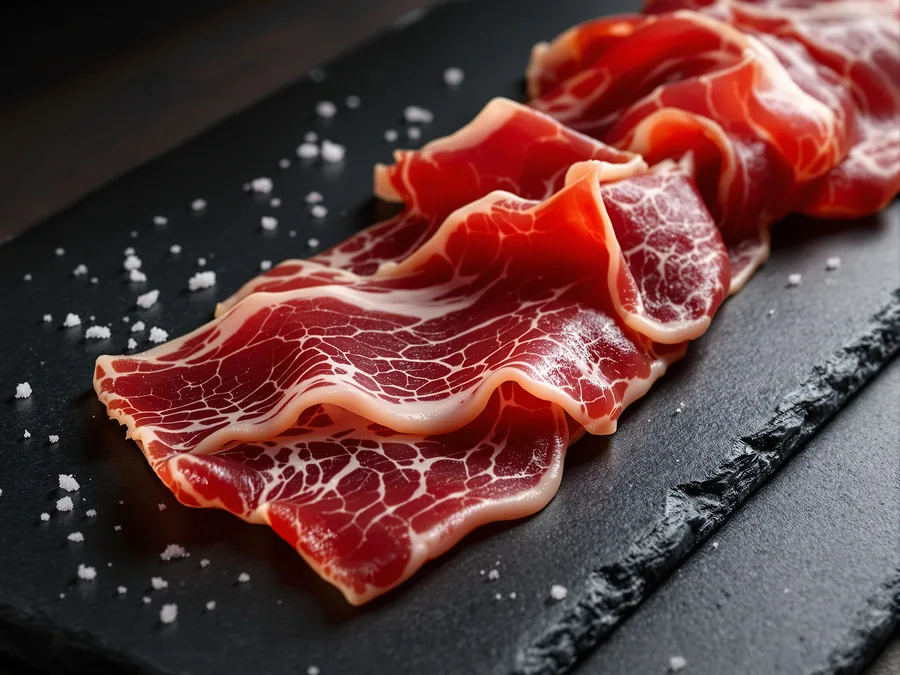
Salt and time, nothing else. Sliced thin enough to see light through, it disappears on the tongue; as the salt recedes, a long sweetness remains.
Antipasto boards · with wine · salads
Specifications and packaging to be agreed on request
Salami
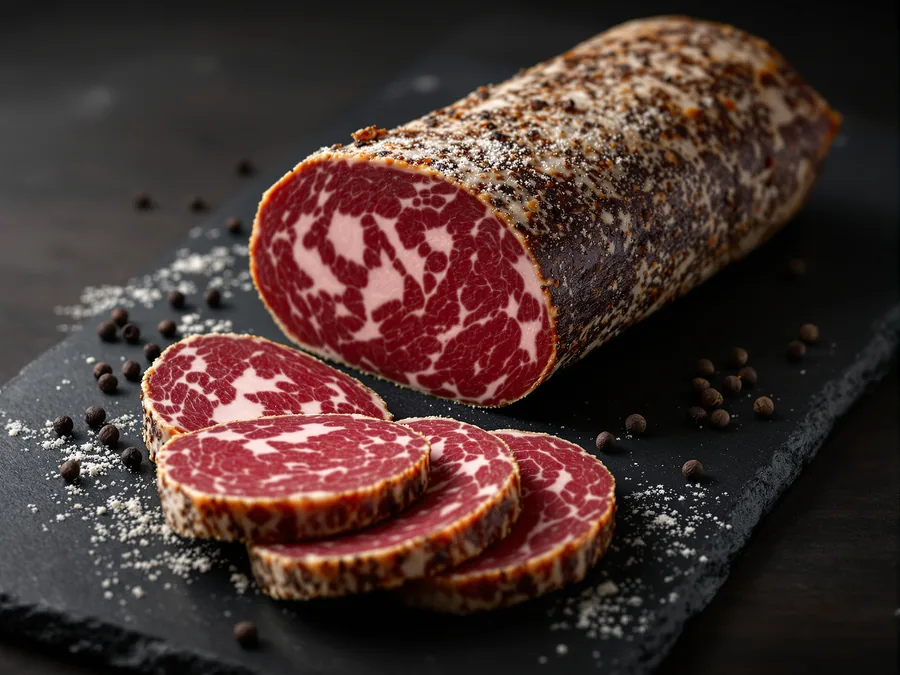
The tang of fermentation and the sweetness of wagyu fat hold each other up. Clearly grained, deepening as you chew — a flavour that can carry a glass of red.
Boards · pizza · sandwiches
Specifications and packaging to be agreed on request
Sausage
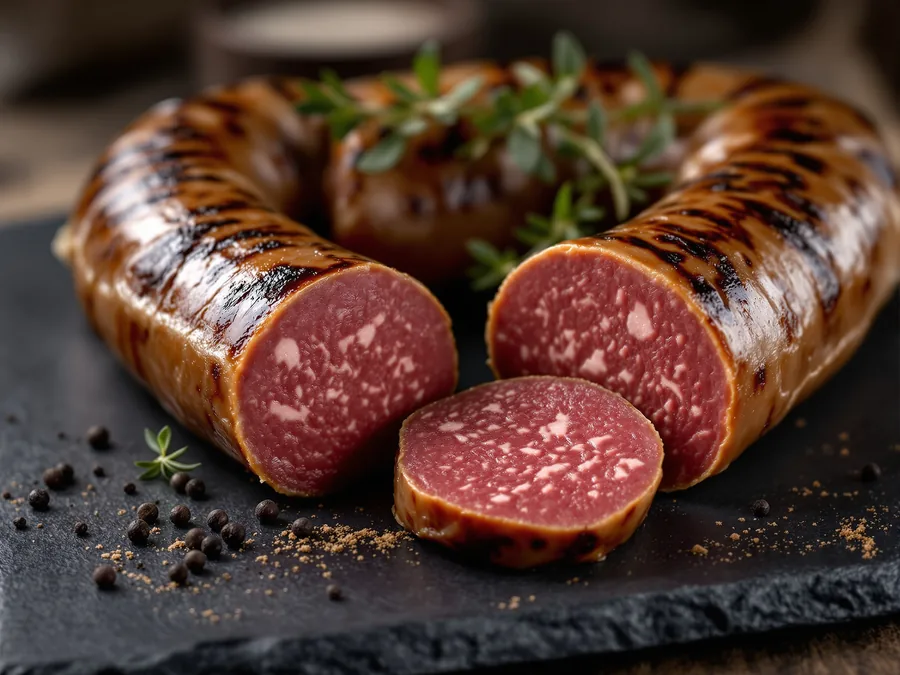
No heavy seasoning — the meat itself. The juices arrive first as you bite through; the spices stay behind, quietly holding them up.
Brunch · teppan · grill
Specifications and packaging to be agreed on request
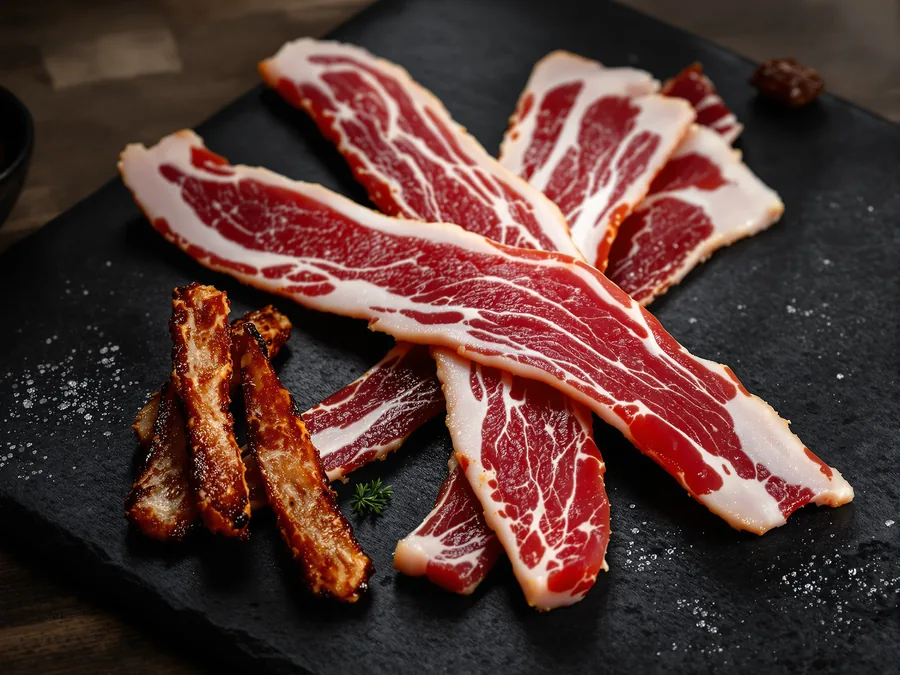
Bacon
Bacon made from wagyu does not cook down to a pool of fat — the lean is still there, still with bite, and the aroma is fuller.
Breakfast · pasta · burgers
Specifications and packaging to be agreed on request
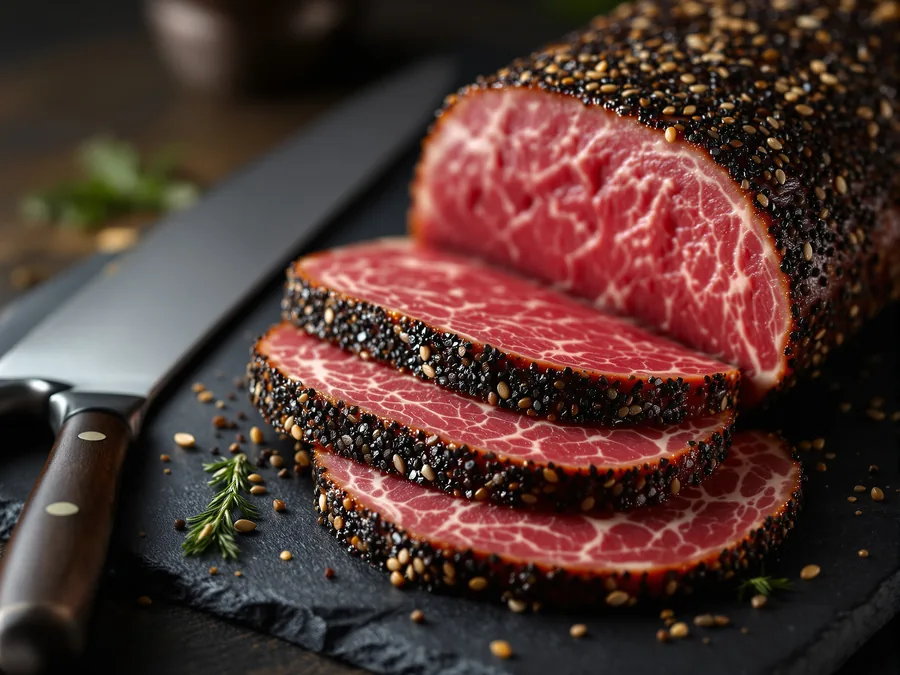
Pastrami
Black pepper and spices form the crust; inside is tender wagyu. It works sliced hot or cold — a main ingredient with presence of its own.
Sandwiches · boards · salads
Specifications and packaging to be agreed on request
Product category names, ingredient lists, shelf life and serving instructions are as stated on the actual product label.
Development Principles

The Shorter the Ingredient List, the Harder It Is
Masking is easy; not masking is hard. To shorten an ingredient list, the raw material has to be good enough and the process stable enough. A clean, short ingredient list is the baseline across every NIKU-LABO product line, charcuterie included.
- Original recipes Each of the five categories designed from scratch — no off-the-shelf formulas.
- One process line Curing · fermentation · low temperature · time — the same lineage as KOJI-BEEF aging.
- Reproducible Repeatable from parameters and records, not from feel.
Supply & Applications
Between the aging cabinet and the cold-cut board there is a long road. Charcuterie gives a restaurant a whole additional register — cold plates and the breakfast service — beyond steak, shabu-shabu and yakiniku.
- Western restaurants · antipasto boards
- Wine bars · craft beer bars
- Hotel breakfast · buffet counters
- Cafés · sandwiches
- Japanese restaurants · western-style à la carte
- Specialty retail · seasonal gift boxes
Five Expressions on One Board
The sweetness of prosciutto, the tang of salami, the smoke of bacon, the spice of pastrami, the juices of sausage — one animal, five entirely different readings. Boards can be composed by season and wine list.
Adjusted to Your Needs
Flavour intensity, spice composition, slice format and packaging specification can all be discussed per outlet and channel. For sampling, supply and partnership, please get in touch — contact details in the footer.