
Technology Overview
AI quantitative evaluation is the technical backbone running through the entire Koji Beef chain — it quantitatively optimizes live-animal selection, verifies the effectiveness of koji-mold feed, and ultimately delivers predictable quality in chilled product. What Koji Beef offers is a replicable technology system, not a single farm.
Live-Animal Selection
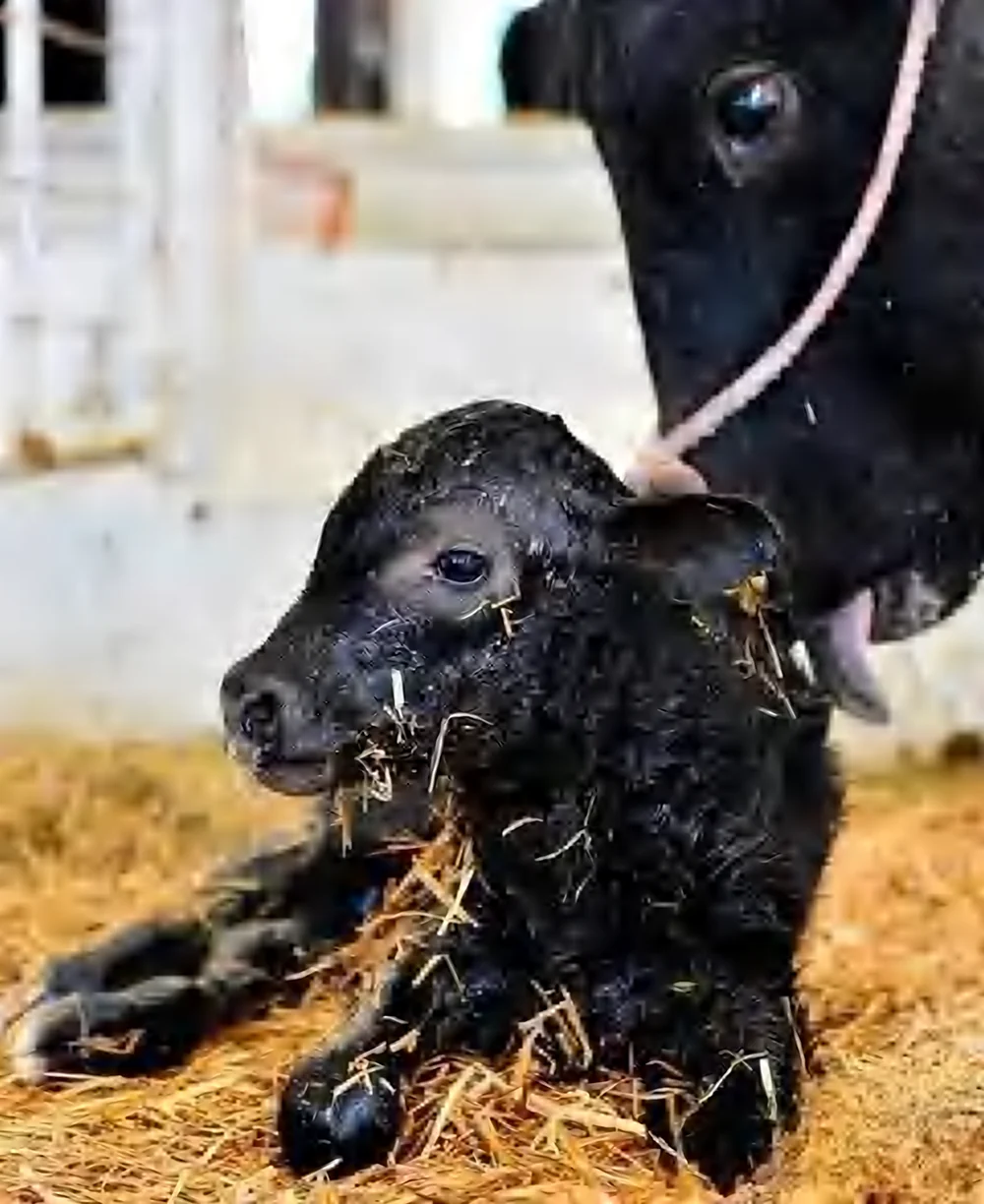
Blood sampling at 12 months; AI identifies high-potential animals.
Koji-Mold Feed
Fermentation designs the flavor base; feed effects are verified within 2–3 months.
Herd Management
Quality is predicted before shipping; product is handed over to 02 Chilled Wagyu Wholesale.
KOJI-BEEF · Technology Provider
- Japanese Wagyu breeding philosophy · Bloodline selection (2 sire and 2 dam lines × proprietary algorithm)
- AI quantitative evaluation · Live-animal selection and feed verification
- Koji-mold fermented feed design · In-house premix (also supplied separately to partner farms)
- Chilled · Wet-aging process and quality standards
- Product adaptation and formulation for Chinese food culture
Partner Farms · Local Capacity
- Wagyu crossbred (F1/F2) herd and breeding (approx. 10,000 head at the partner base)
- Feed sourced locally from the Yellow River Delta
- Local farming team and facilities (approx. 80 staff)
- Scaled capacity (planned site of approx. 1,000 mu / 67 ha)
AI Quantitative Evaluation
The "quantity and quality" of meat are determined by genetics and rearing together. Conventional grading only assigns a grade — it does not equal good taste — and the result is known only at shipping (about 30 months). AI quantitative evaluation moves the evaluation point forward by about 18 months.
Blood Sampling · AI Quantitative Evaluation
Gene expression is analyzed.
Within 2–3 months
Feed / additive effects are verified.
Shipping
Quality has already been predicted in advance.
Seven Carcass Quality Indicators
| Indicator | Evaluation Range |
|---|---|
| Carcass Weight | 300–600 kg |
| Ribeye Area | 30–110 cm² |
| Rib Thickness | 4–12 cm |
| Subcutaneous Fat Thickness | 1–5 cm |
| Yield Base Value | 65–85 |
| BMS Marbling | 1–12 |
| Oleic Acid | 40–60 % |
Technical background: built on more than 20 years of "AI beef technology" research at Kindai University, adopted by JST START in 2022 and commercialized by BEEF SOMMELIER Co., Ltd. in 2024. Data compiled from BEEF SOMMELIER's published technical materials and ALIC materials; figures are illustrative samples.
Bloodline Design and Grading
| F Generation | Wagyu Bloodline Content | Composition | Notes |
|---|---|---|---|
| F1 | 50% | Wagyu × Holstein | Core bloodline of Koji Beef |
| F2 | 75% | F1 × Wagyu | Core bloodline of Koji Beef |
| F3 | 87.5% | Further backcrossing | Close to Wagyu characteristics |
| F4 | 93.75% | Further backcrossing | Regarded in the industry as "near-purebred" |
| Purebred Japanese Black | 100% | — | Mainstream in Japan |
Koji Beef partner farms use Wagyu × Holstein F1 / F2 as the core bloodline — a deliberate design for the Chinese market: balancing price and quality to rear a "Chinese-table" Wagyu that melts lightly on the palate and stays clean rather than heavy. Sire and dam lines are narrowed to 2 each, selected by a proprietary algorithm, so the genetic source is highly concentrated and quality is stable and predictable.
Yield Grade
How much meat can be taken from one animal (yield): A is the highest, C the lowest. It measures yield efficiency and has nothing to do with "how good it tastes."
Meat Quality Grade
Four items — BMS marbling / meat color / firmness and texture / fat color and quality — are each scored, and the lowest score is taken. Quality 3 = BMS 3–4 / Quality 4 = BMS 5–7 / Quality 5 = BMS 8–12.
Koji Feed and Premix
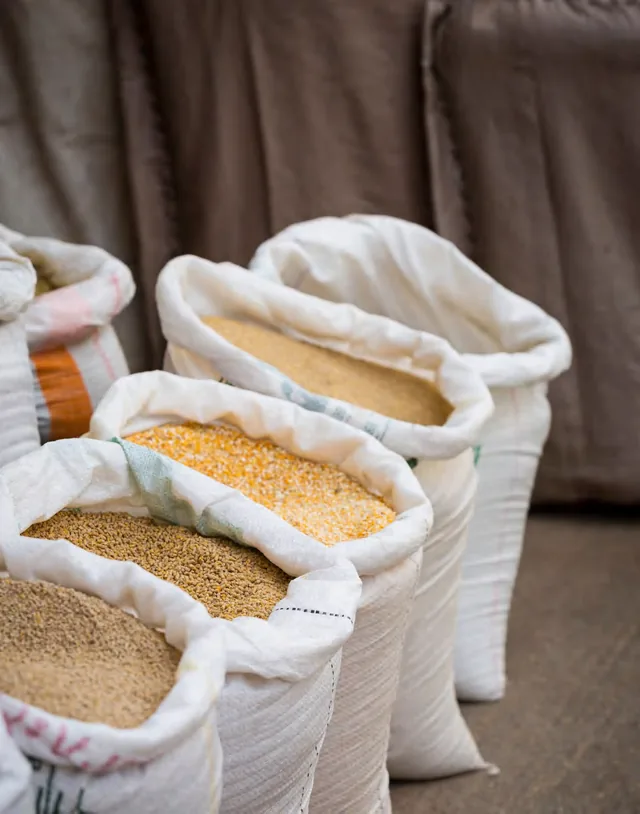
Koji mold does not act on the meat directly; it is made into fermented feed that takes part in rearing — shaping the eating experience step by step along the chain of "enzymatic breakdown → digestion → fattening → fat and umami." Koji Beef achieves this with an in-house premix, which is also supplied separately to partner farms.
Enzymatic Pre-digestion
At the feed stage, three key enzymes first break starch down into sugars and protein into amino acids and small peptides — the feed carries its own fermented sweetness, with good palatability and stable intake.
Better Digestion and Absorption
Pre-digestion and fermentation products condition the rumen and gut, improving nutrient utilization and reducing stress.
Steadier Fattening
A gentle weight-gain curve, fine fat deposition and even marbling — the physical basis of good mouthfeel.
In the Meat
A higher proportion of oleic acid → a lower fat melting point, melting at close to body temperature; umami amino-acid precursors accumulate for a fuller meat flavor.
Three Results on the Palate
Melts in the Mouth
High oleic acid → a fat melting point lower than ordinary beef, so it begins to melt at mouth temperature.
Rich Yet Light
The fat is fragrant and lightly sweet, never heavy — it resists turning greasy or hard even in hot pot or when served cold.
Deeper Umami
"Umami through enzymes" runs from feed through to wet aging, with amino acids accumulating all the way.
The above describes the reported directions of effect of koji-mold fermented feed in Wagyu fattening; actual figures are subject to the measured AI quantitative evaluation results of each batch. Specific formulations, strains and parameters are core company confidential information and are implemented in compliance with China's GB food safety standards.
Partner Farms and Technology Transfer
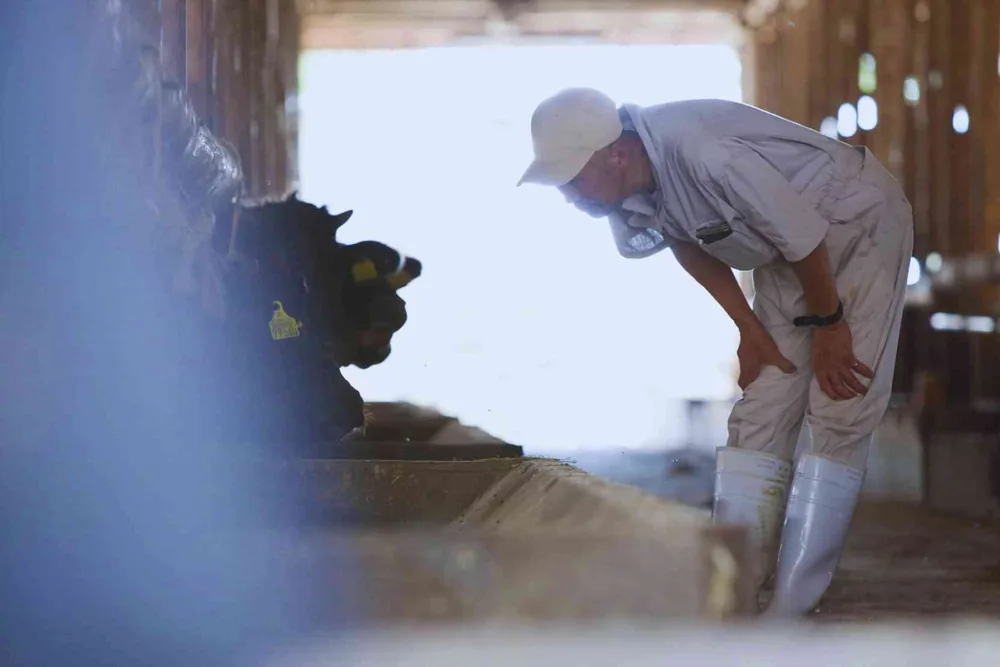
Koji Beef does not operate its own farms; it is a partner and technology provider built around Japanese Wagyu know-how. We transplant Japan's breeding philosophy, AI quantitative evaluation, and fermentation and aging processes into a partner demonstration farm in Gaoqing County, Zibo, Shandong (known as "China's Black Cattle Town") — the farm sits in the Yellow River Delta, with feed readily available nearby.
Local Adaptation
Around Chinese ways of eating — hot pot, shabu, barbecue, teppanyaki — we use AI quantitative evaluation to adjust the balance of marbling and lean meat, flavor, and cut structure, rearing Wagyu to a quality profile suited to the Chinese table. This is the irreplaceable core value of a technology provider.
Scale and staffing figures reflect the current status of the partner demonstration farm in Gaoqing, Shandong; formal business is subject to the latest verified data. Progress in expanding the domestic partner network is subject to official disclosure.